Somatic Techniques for Hypermobile Regulation
Living with hypermobile Ehlers–Danlos syndrome (hEDS) or generalised hypermobility often brings a persistent sense of instability. When the body feels loose and movements and bodily functions seem unpredictable, the body lives in a state of high alert. We get stuck in functional freeze or fight-flight.
This constant vigilance creates chronic nervous system tension, a felt sense of vulnerability, which in turn turns up the signals on pain, fatigue, and anxiety. It can feel like our body is screaming at us for peace, but we just have no idea how to get it.
If you’re neurodivergent, you’re also likely to be hypermobile. Around 75% of neurodivergent women are also hypermobile, with the ratio being only slightly lower for men. If you don’t know you’re hypermobile, then you can often find yourself chasing diagnoses to try and figure out why you feel so dysregulated and exhausted all the time.
Somatic approaches, particularly gentle mindfulness combined with micro-movements, help you feel "held" from the inside out. While these techniques don’t change the underlying connective tissue, they retrain the nervous system to co-regulate, stabilise muscular tone, and restore a sense of safety.
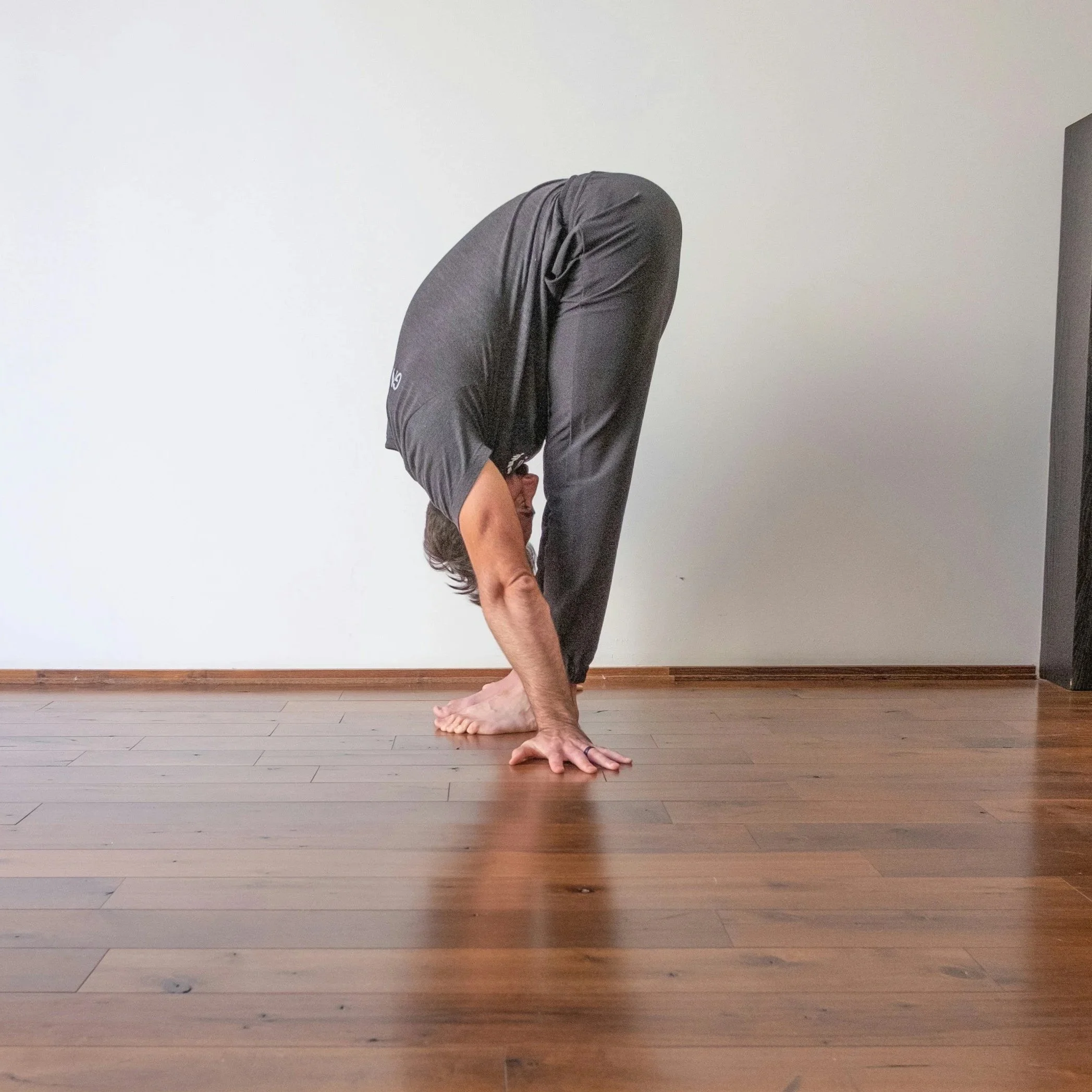
Understanding Hypermobility Beyond Being Double-Jointed
Hypermobility is often dismissed as just being flexible or double jointed, but it’s actually a systemic expression of a connective tissue difference. Connective tissue is the glue of the human body, composed primarily of collagen. In hypermobile conditions, this glue is more elastic or stretchy than typical.
Because collagen is found in almost every organ and structure, the impact of hypermobility goes far beyond loose joints.
A Multi-Systemic Experience
When your glue is stretchy, the body has to work harder to maintain integrity across key systems. This is why its hard to diagnose hypermobility sometimes, especially when we don’t present with the classic set of flexible joints:
The Musculoskeletal System: Beyond joint instability and partial dislocations (not everyone experiences this), the muscles are in a state of constant overwork. They take on the job of ligaments, leading to chronic myofascial pain and early-onset fatigue. Basically, your muscles are doing all the work that the ligaments are meant to do, causing stiffness and pain. Particularly in the postural muscles like hamstrings, quads, buttocks, and parts of our core.
The Proprioceptive System: The brain receives fuzzy data from stretchy ligaments about where the body is in space. This often manifests as clumsiness, poor balance, or a feeling of being disconnected from your limbs.
The Autonomic Nervous System (ANS): There is a high correlation between hypermobility and Dysautonomia (a dysfunction of the nervous system resulting in conditions such as POTS). Because blood vessels are also made of connective tissue, they can be stretchy, leading to blood pooling and a heart that has to race to pump blood to the brain. This keeps the nervous system in a state of perpetual physiological stress. Standing for long periods is a complete no-no. Long walks can lead to leg fatigue beyond what you should be experiencing. Recovery from exercise takes longer. You can get dizzy upon standing. And even sitting down feels uncomfortable.
The Gastrointestinal System: The gut is a long tube of connective tissue. Hypermobility can lead to constipation, acid reflux, or food sensitivities, as the digestive tract struggles to work efficiently.
The All-Body Impact
Living with systemic hypermobility means the body is constantly navigating micro-instabilities. This requires an immense amount of background processing power from the brain, which is why brain fog and exhaustion are just as much a part of the condition as joint pain and gut problems.
Understanding that your fatigue or anxiety may be a physiological response to stretchy tissues can be a powerful step in self-compassion. You aren't just tired, your body is working overtime to hold itself together.
Why Grounding Matters for Hypermobility
For simplicity today, I’m going to zone in on joints. This is because often hypermobile people are struggling through with bodies that are in pain, feel anxious and are exhausted. So supporting that first can be a great way to feel relief through safety.
When we relearn how to feel safe in our bodies, this will often improve some of the other struggles we may be experiencing, like gut and digestive problems.
Structural Ambiguity: Stretchy ligaments can make joints feel unreliable. The nervous system often compensates by bracing. This leads to tightening large muscle groups to do the job the ligaments can’t, meaning we end up in a paradox of being loose yet stiff.
Nervous System Overdrive: Chronic instability keeps the sympathetic nervous system (fight/flight) activated. This state actually interferes with proprioception - your brain’s ability to know where your limbs are - creating a cycle of clumsiness and injury. And makes you feel constantly anxious but you don’t know why.
Embodied Safety: Grounding gives the brain new data: You are supported. Your weight is being borne. You are safe to let go of protective guarding.
Core Principles of Practice
Some of these are hard for hypermobile bodies, especially those who have grown up as dancers, gymnasts or doing other high impact sports or exercise. Our bodies want to stretch and feel movement. So slowing down and doing smaller movements can feel really challenging.
Safety First: Work within pain-free ranges. If a movement triggers a click or a sharp pinch, make the movement even smaller.
Micro-Movements: Think in millimeters, not inches. These aren't strengthening exercises; they are sensory conversations with your brain.
Curiosity Over Correction: Observe sensations without judgment. Notice tightness as information, not a mistake.
Proximal Stability: Focus on the core of each joint (the muscles closest to the socket) rather than the extremities.
Exhalation as an Anchor: Use the breath to signal the rest and digest system that the work is done.
Practical Grounding Techniques
Below is a simple, step by step guide, to find support and nourishment for your joints and nervous system. You can do this practice daily, or a few times a week, and it doesn’t take up hours of your time.
I’ve zoned in on the shoulders as a good place to start as very often this is an area of the body that hypermobile humans struggle with, and can lead to that horrible coat hanger pain (pain across the neck and tops of shoulders). Especially since these days we spend so much time sitting with our heavy head slightly forward for desk work or looking at our phones.
1. Support-First Check-In (1–3 Minutes)
Sit or lie on firm surface. This can be a high-backed chair or the floor with a pillow under your knees.
The Practice: Close your eyes or soften your gaze. Notice the exact points of contact between your body and the chair/ground. The backs of the thighs, the shoulder blades, the heels.
The Shift: On each exhale, imagine those contact points widening. Let them expand into the chair/floor. Feel the chair/floor pushing back to meet you.
Purpose: Over time, this recalibrates the brain to recognise external support, reducing the need for internal muscular over-guarding.
2. Proximal Micro-Bracing: The Shoulder (2–5 Minutes)
For those of us with unstable shoulders, which might be experienced as pain across the neck, tops of the shoulders, or upper back stiffness, we focus on the scapular stabilisers.
The Practice: Sit tall. Spend a few moments noting where your body is in space. Are your shoulder hunched and tight? Do they roll forwards? Now very slowly (1–2mm), draw the shoulder blades slightly toward each other and down. Hold for 3 seconds while breathing normally. Release completely and return to your starting position. Repeat this up to five times. Remember, keep it really slow and small. This isn’t about sticking the check out, or doing bracing of a different kind to pull the shoulders back.
Purpose: This practice wakes up the deep stabilisers that keeps the head of the arm bone centred in the socket.
3. Pelvic Rooting and Lower Belly Softening (3–6 Minutes)
The Practice: Lie on your back with knees bent. Place one hand on your chest and one on your lower belly. I like to put pillows under my elbows so I can relax a little more.
The Shift: Inhale into the chest for 3 counts. As you exhale slowly for 5 counts, feel the lower belly drop toward the spine naturally. Don't clench or tense, simply follow the vacuum of the breath.
Purpose: Connects the breath to the deep core, providing a column of support for the spine.
4. The Weighted Blanket Visualisation (Integration)
This is a total body technique to end your practice, working on integrating everything else and signalling a deep sense of embodied safety to your nervous system. If you have a weighted blanket you can use it, or you can place a normal blanket and a couple of pillows over you.
The Practice: While lying down with your blanket or pillows on top of you, visualise a gentle, warm weight (like soft sand warmed by the sun) being poured over your limbs, starting at your shoulders and moving down to your feet.
The Shift: As the weight settles, allow your large mover muscles (quads, biceps, lats) to go completely slack, trusting the floor to catch you.
Purpose: Deeply downregulates the sympathetic nervous system, providing a sense of containment that hypermobile bodies often lack.
Building a Sustainable Practice
The goal of somatic grounding isn't to fix your joints in a single session. It is to build Interoceptive Awareness, the ability to feel your body from the inside.
Start small. Five minutes of intentional awareness is more effective than an hour of forced exercise. And will have fewer consequences like delayed onset muscle soreness and fatigue. By teaching your nervous system that it is supported, you reduce the noise of pain and create a more stable, quiet house for your spirit to live in.
If you or someone you know is discovering their neurodivergence or sensitive nature, then you might like to read my first novella, Little Bird, out now. Available as a kindle download or you can order through your local independent bookshop.